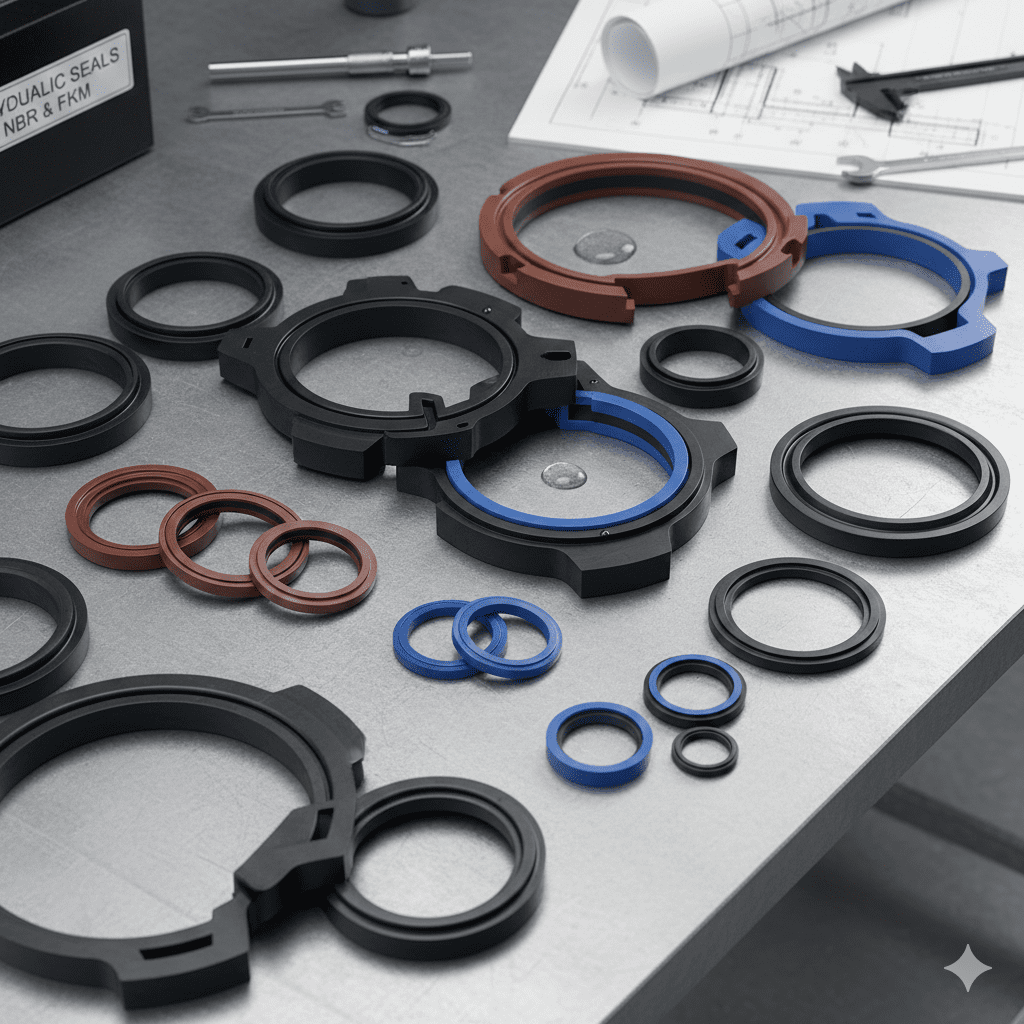
Hydraulic Seals
Hydraulic seals are vital components used in hydraulic cylinders to prevent fluid leakage and withstand high pressures. They are typically made from materials like polyurethane, rubber, or PTFE.
Key Categories
-
Piston Seals: They maintain sealing contact between the piston and the cylinder bore, ensuring efficient mechanical work.
-
Rod Seals: Often considered the most critical, they prevent fluid from leaking to the outside of the cylinder.
-
Wiper Seals: Designed to scrape away contaminants from the rod as it retracts into the cylinder.
Maintenance Tips
-
Check for Contamination: Particles in the hydraulic fluid can score the seal surface.
-
Temperature Control: Excess heat can harden the seal material, leading to cracks.
-
Proper Lubrication: Dry movement can cause rapid wear and tear.
| Feature | NBR (Nitrile) | Viton (FKM/Fluorocarbon) |
| Temperature Range | $-30$°C to $+100$°C | $-20$°C to $+200$°C |
| Media Resistance | Oils, water, hydraulic fluids | Harsh chemicals, acids, extreme heat |
| Main Advantage | Abrasion resistance, cost-effective | Chemical stability, long life cycle |
| Common Use | General hydraulics, mobile machinery | Aerospace, chemical plants, high-heat engines |
Hydraulic seals are essential components of cylinders that contain fluid and prevent contamination. They are vital for the operation of excavators, presses, and industrial machinery.
-
Piston Seals: Act inside the cylinder.
-
Rod Seals: Prevent fluid from leaking out.
-
Wiper Seals: Clean dust and debris from the rod.